
Find Lafayette Parish Residents
Start with what you already know. An address sends you to the Assessor or the LCG GIS map. A full name paired with a ZIP code and birth month or year fits the state voter portal. Party names can lead into Lafayette City Court, the 15th Judicial District Court, or a federal docket. Each system covers a different jurisdiction. Older names belong to the library, old newspapers, obituaries, or a city directory. No single public roll lists everyone living in Lafayette Parish.
Owners connect to land more easily than occupants do. The assessment roll sometimes shows a business. It may show an owner mailing address that differs from the parcel situs. Voter data may be withheld or replaced for protected people. Current vital certificates stay closed. Treat any result as one piece of a match. A second source should confirm the place, date, or relationship. Do this before two similar names get joined.
- Check the Assessor or GIS when an address or parcel is known.
- Use the Louisiana voter portal when the required personal details are available.
- Search the correct court system for a party name and case status.
- Move to land records, directories, newspapers, or obituaries for an older trail.
- Send a focused request to the custodian when the needed record is not online.
Lafayette Parish Directory Offices
Three local offices anchor most Lafayette Parish residents directory searches. The Clerk of Court records conveyances, mortgages, plats, and other land instruments. It also serves the 15th Judicial District Court. The Assessor identifies and values parcels but does not establish the legal deed chain. The Registrar of Voters handles local registration service. The Secretary of State runs the public lookup. LCG holds municipal and consolidated-government records through its records request system. Each office answers a different question about a name or an address.
Lafayette Parish Clerk of Court
800 S Buchanan Street
Lafayette, LA 70501
337-291-6400
Lafayette Registrar of Voters
1010 Lafayette Street, Suite 313
Lafayette, LA 70501-6885
337-291-7140
Phone or written contact still matters. A portal can block access, lack an image, or cover only recent years. The Clerk offers eSearch and ClerkConnect routes. Subscriptions and account gates apply to parts of those systems. Public terminals, copy staff, and a clear request can reach material a broad web search misses. Cite an act, docket, parcel, date, or party name.
Lafayette Property Names and Addresses
The Lafayette Parish Assessor property search is a strong first stop for a current owner. It also works for a business name. Its basic screen takes an account number or business owner name. It then links real-estate work to the Beacon and GIS routes. A result can expose the parcel, situs address, owner, and assessed-value fields. Read a mailing line with care, though. It does not prove the owner lives on the parcel.
| Search control | Use it for | Key caution |
|---|---|---|
| Account Number | A known assessment account | Not a street-address field |
| Business Owner Name | Business personal property | Not the full real-estate name search |
| Beacon name/address/parcel | Real-estate cards | Interactive access can be limited |
| LCG GIS address point | Map and parcel context | Map context is not title proof |
The Lafayette Parish Assessor page opens with a plain choice. Visitors pick between an account search and a business-owner route. That first screen sets the direction before the parcel tools take over.
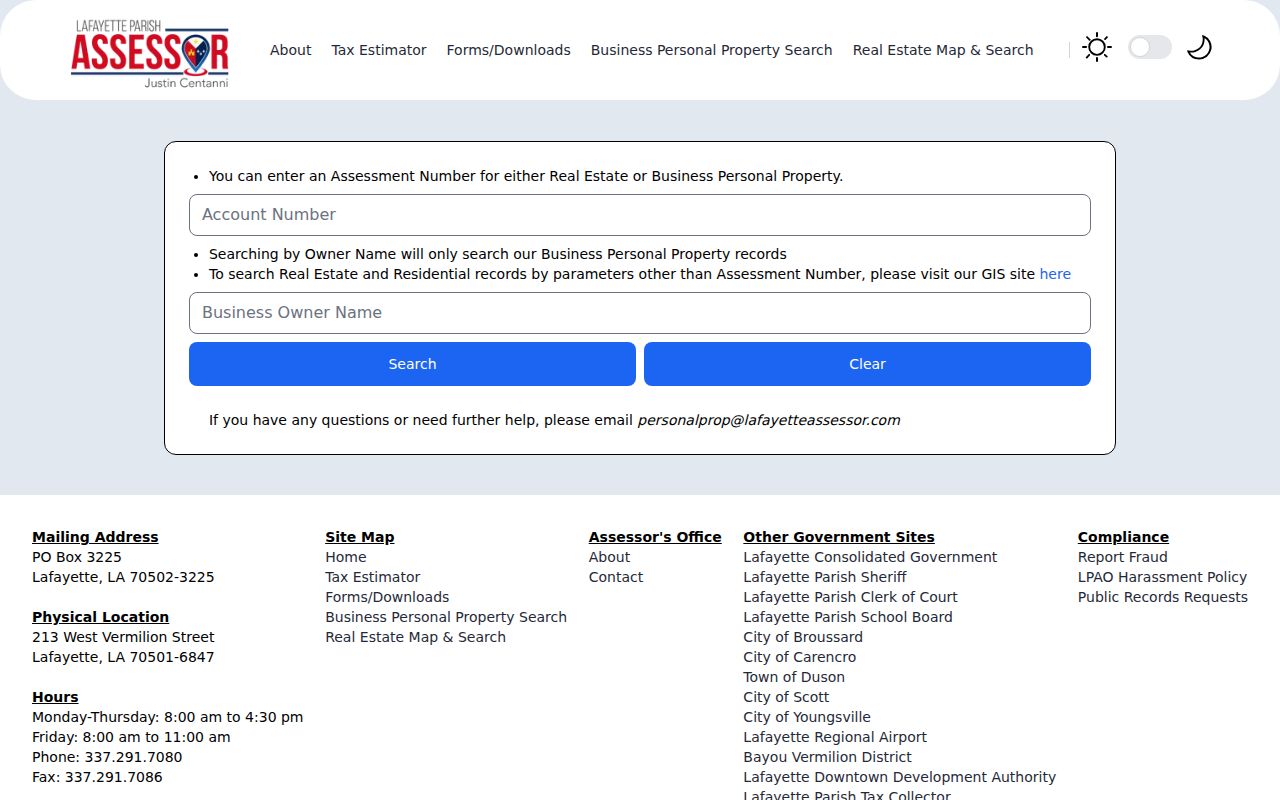
Think of it as orientation. The parcel card and the Clerk's recorded instruments carry the hard facts. Together they let you trace an address chain with confidence.
Current Lafayette Parish Resident Rolls
Each official source works like a narrow directory. None of them overlaps neatly with the rest. The property roll lists owners by parcel. The voter portal confirms registration from a name or a street address. Court indexes name parties and case status, but only inside the court that keeps the case. Land records tie names to recorded instruments. Jail custody, state prison rosters, and the state registry sit on separate systems entirely. Treat none of them as a complete residents directory for Lafayette Parish.
| Official source | What it can confirm | Custodian | How to reach it |
|---|---|---|---|
| Assessment roll | Owner, parcel, situs, value fields | Parish Assessor | Free search, GIS, office |
| Voter lookup | A matching registration and voter details returned | Secretary of State and Registrar | Name or address portal, local office |
| Land index | Parties, instrument type, filing trail | Clerk of Court | eSearch account, counter, copies |
| City Court index | Case, status, event and disposition fields | Lafayette City Court | Public web search, clerk |
| LCG files | Municipal records tied to a named request | Lafayette Consolidated Government | JustFOIA, phone, written request |
Official records show why a name appears and which office keeps the file. Commercial compilations often skip that chain. They may merge past residents, old addresses, and phone listings into one tidy profile. A Lafayette Parish residents directory conclusion should instead rest on three things. Name the current custodian, the record date, and a record identifier. That is what makes a lookup hold up. Trust the office that keeps the file.
Lafayette Voter Lookup Fields
Louisiana runs its voter lookup through the Secretary of State, with two search routes. The name route takes a first name, last name, and ZIP code. It also wants a birth month and year. The address route takes a street address, apartment or lot, city, and ZIP code. These fields cut down false matches. That helps the system land on the right registration record instead of a near-twin. Some questions will need more than the online lookup. The Lafayette Registrar of Voters handles office help and eligible public-file questions about the county's voter rolls.
| Lookup mode | Fields shown | Best use |
|---|---|---|
| Name | First, last, ZIP, birth month/year | Confirm one registration |
| Address | ZIP, address, apt/lot, city | Check the address-based portal result |
Some protected residents appear with substitute or suppressed address details in the rolls. A blank result proves nothing. It does not show that a person is unregistered or absent from the parish. Louisiana's Address Confidentiality Program, protected-official rules, simple data entry quirks, and even the exact ZIP or spelling used in a resident lookup can all change what the search returns.
Lafayette Courts Need Three Checks
Lafayette Parish has three separate court systems. City Court, the 15th Judicial District, and the federal Western District keep their own dockets. They never share one index. City Court's public search takes a name or docket number. A result can list the defendant, date of birth, case status, occurrence, violation, disposition, and fines. It can also include sentence and events. The court refreshes that data about every 30 minutes. It warns that the tool does not verify warrants. ClerkConnect is the subscription and copy gateway for 15th Judicial District material. It took over after the 2025 migration. Federal party searches run through PACER. Check the jurisdiction before deciding no case exists. Sealed files, juvenile records, and name variants leave gaps. For certified copies or a final legal status, contact the court that owns the file.
Lafayette Public Records Requests
Louisiana's Public Records Law, La. R.S. 44:1 et seq., frames access to records held by public bodies. Lafayette Consolidated Government routes its requests through JustFOIA. A strong request names the department, record type, date range, address or project, and preferred delivery format. It never asks an office to research someone. The LCG public-records guidance explains the local intake route. The JustFOIA portal lets a requester start and track a request or search the archive. The portal is only one channel. A department custodian, a phone contact, or a written request still works when the form lacks the right category. Good requests get answered faster.
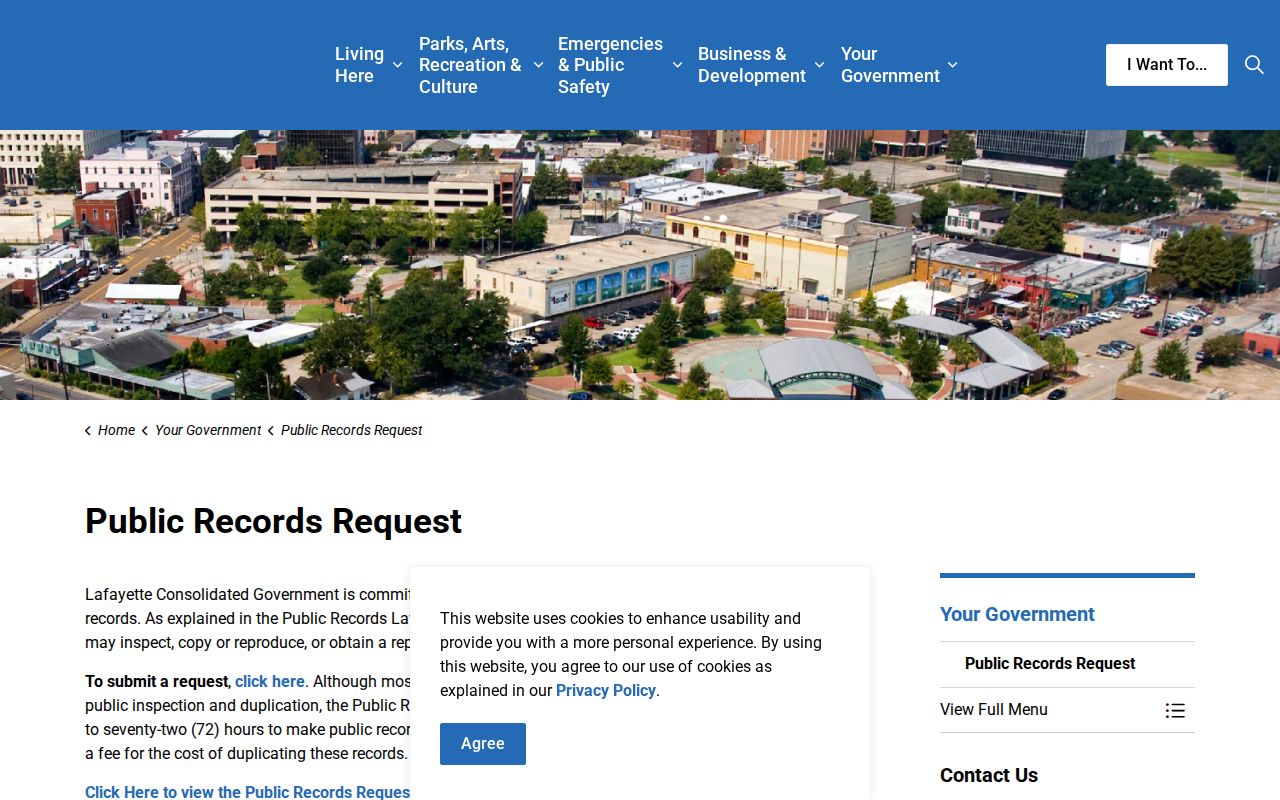
The parish clerk handles each records request through the official local process.
Lafayette Records Terms Made Plain
Small words in a records index carry real weight. A roll is an official list built for one stated purpose. Assessment and voter administration are two common ones. An index only points to another record. A parcel is a mapped tract with its own identifier. Its mailing address and street situs can differ. Neither alone proves where the land sits. A criss-cross directory, by contrast, sorts entries by street or phone instead of by surname alone. That is what makes it useful for finding neighbors in Lafayette Parish.
Read the source level. An index hit is a lead. An image shows more. A certified copy is the custodian's formal version.
Record the agency, date, identifier, and status. A coverage note helps too. That citation lets you repeat the search or ask the office for the full record. It also keeps an old directory entry from being mistaken for a current Lafayette Parish address.
Historical Lafayette Parish Directories
Lafayette Public Library holds the parish's central genealogy route. Its collection spans city directories, newspapers, local resources, and dedicated GEN01 through GEN04 computers. Staff will help shape a search but will not run a full family-history project. Ancestry Library Edition works inside the building. MyHeritage and HeritageQuest are among the online options the library describes. UL Lafayette's Louisiana Room adds newspapers, microforms, local history, and the Daily Advertiser Obituary Index covering 1882 through 2022. Digitized Lafayette Gazette issues run 1893 through 1908. Daily Advertiser titles cover parts of the 1970s. These are finding tools, not certified civil records. Full years, access points, and the household method belong in the Lafayette Parish city directories guide.
Search Vermillionville and Lafayette
Old resident rolls hinge on place names. Lafayette was incorporated as Vermillionville in 1836 and took its current name in 1884. The parish was carved from St. Martin Parish in the 1820s. It once spanned land now in Vermilion and Acadia. A nineteenth-century newspaper, church entry, deed, or directory title may therefore use a name or boundary that looks wrong on a modern map. Search both Lafayette and Vermillionville. Then check the record date against parish history. Initials, accents, French-derived names, married surnames, and spelling variants each deserve their own query. A date or instrument number confirms the match. This name change explains many blank searches better than assuming the record never existed.
Lafayette ZIP Is Not Jurisdiction
A Lafayette mailing address does not settle jurisdiction. The parcel may lie outside city limits. The parish also contains Broussard, Carencro, Scott, Youngsville, Duson, and the unincorporated community of Milton. USPS delivery groups, Census ZIP Code Tabulation Areas, municipal limits, council districts, and parcel boundaries each answer a different question. Confirm the postal line with USPS first. Then check the Assessor situs and the LCG GIS address point. That sequence finds the right office. It also keeps a parish address out of City Court just because the mail line reads Lafayette, while the parcel and legal description settle land jurisdiction. The ZIP directory supplies the postal detail.
Lafayette GIS Keeps Changing
Current map data in Lafayette Parish changes fast. LCG's 2025 annual report lists 2,664 address points, more than 350 road centerlines, 259 subdivisions, and 2,589 lots. The same year brought 12 annexation updates and 55 zoning updates. It also brought more than 300 GIS service requests. Those are work counts, not resident totals. They prove address and boundary data is actively maintained. Use the official Louisiana parish profile and LCG maps to orient any record search. The state profile confirms Lafayette Parish identity and its communities.
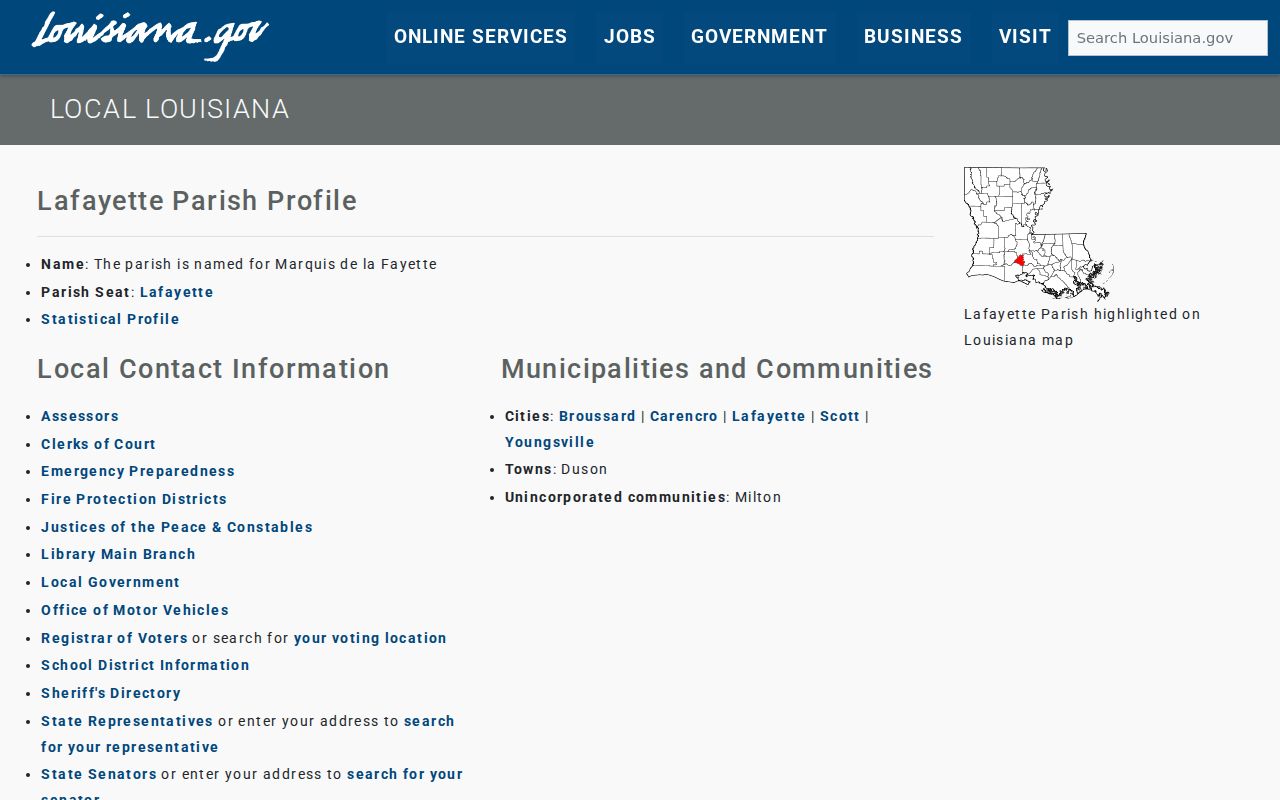
The profile separates the parish from its cities and town. That distinction keeps a residents directory search pointed at the right custodian.
Use Lafayette Records With Care
Access has limits, and Lafayette Parish builds them in on purpose. Vital certificates stay closed to most requesters. Juvenile and sealed court files are off the table. The Louisiana Address Confidentiality Program shields certain participants from public address trails. Protected-official address rules add another layer. None of these controls should be worked around. No name or address trail from any residents directory or records portal may be used to stalk, harass, threaten, or repeatedly contact a person.
Lawful personal use only. Verify records with their custodian and stop when a safety or confidentiality rule applies.
A single record rarely tells the whole story in Lafayette Parish. A booking slip or court filing does not prove identity by itself. The same goes for a registry entry, tax listing, or old newspaper item. None of these show where someone lives now or a current legal status. Write down the date and the agency. Ask the custodian about certified copies and corrections. Also ask about the latest status before you rely on anything. Handled that way, a Lafayette Parish residents directory serves genealogy, heir hunting, and civic research. It also helps with fraud avoidance and reconnecting with someone from years past.